Introduction to How to Cancel Shopify Subscription
If you’ve been asking yourself “How to Cancel Shopify Subscription,” you’re not alone. Many store owners eventually reach a point where they need to stop their Shopify plan, whether it’s due to cost, switching platforms, or simply taking a break. In this guide, we’ll walk through exactly how to cancel my Shopify subscription safely, without losing your valuable store data or getting unexpected charges. By the end, you’ll know how to cancel subscription on Shopify step by step, understand alternative options, and have a clear picture of what happens after cancellation. This comprehensive guide will also cover extra tips, mistakes to avoid, and common FAQs so you feel confident throughout the process.
A Shopify subscription is your gateway to one of the most popular e-commerce platforms worldwide. It provides tools for creating and managing an online store, from designing your website to processing payments and tracking orders. Depending on your plan, you’ll have access to a range of features, including themes, apps, analytics, and support. You pay a monthly fee, and as long as your subscription is active, your store operates fully without interruptions. Understanding exactly what your plan includes will help you make informed decisions before cancelling.
Why You Might Want to Cancel Your Shopify Subscription
People choose to cancel their Shopify subscriptions for many reasons:
Financial reasons: Monthly fees can add up, and some owners find more affordable platforms or tools.
Switching platforms: Perhaps you want features Shopify doesn’t offer, or a new platform fits your business model better.
Seasonal or temporary usage: Some stores operate only during holidays or special seasons, making a permanent subscription unnecessary.
Business changes: You may be closing your store, merging operations, or pivoting to a different product line.
Technical challenges: If Shopify’s tools feel overwhelming or certain integrations aren’t working, owners might explore other options.
Before You Cancel: Important Considerations
Backup Your Store Data
Before cancelling, it’s crucial to back up everything. This includes products, customer information, order history, website content, images, and app data. Shopify does not store all your information indefinitely, and losing it can be costly and stressful. Consider exporting CSV files, downloading images, and making notes of app integrations.
Review Outstanding Payments or Charges
Go through your billing section and make sure there are no pending charges. Understand the timing of your final payment to avoid unexpected fees. This helps you budget appropriately and ensures there are no surprises after you cancel.
Consider Downgrading or Pausing Instead of Cancelling
If your primary concern is cost, Shopify offers two helpful alternatives:
Pause your store: Temporarily stops the store from being live to customers while retaining your data. You pay a reduced fee during the pause.
Downgrade to a cheaper plan: Maintain your store online but pay less monthly. Both options give you flexibility if you might return to Shopify later.
Step-by-Step Guide: How to Cancel Shopify Subscription
Step 1: Log in to Your Shopify Admin Account
Start by logging into your Shopify admin dashboard. Make sure you have full account access because cancelling requires administrative permissions. Take a moment to ensure all your data is updated before proceeding.
Step 2: Navigate to Account Settings
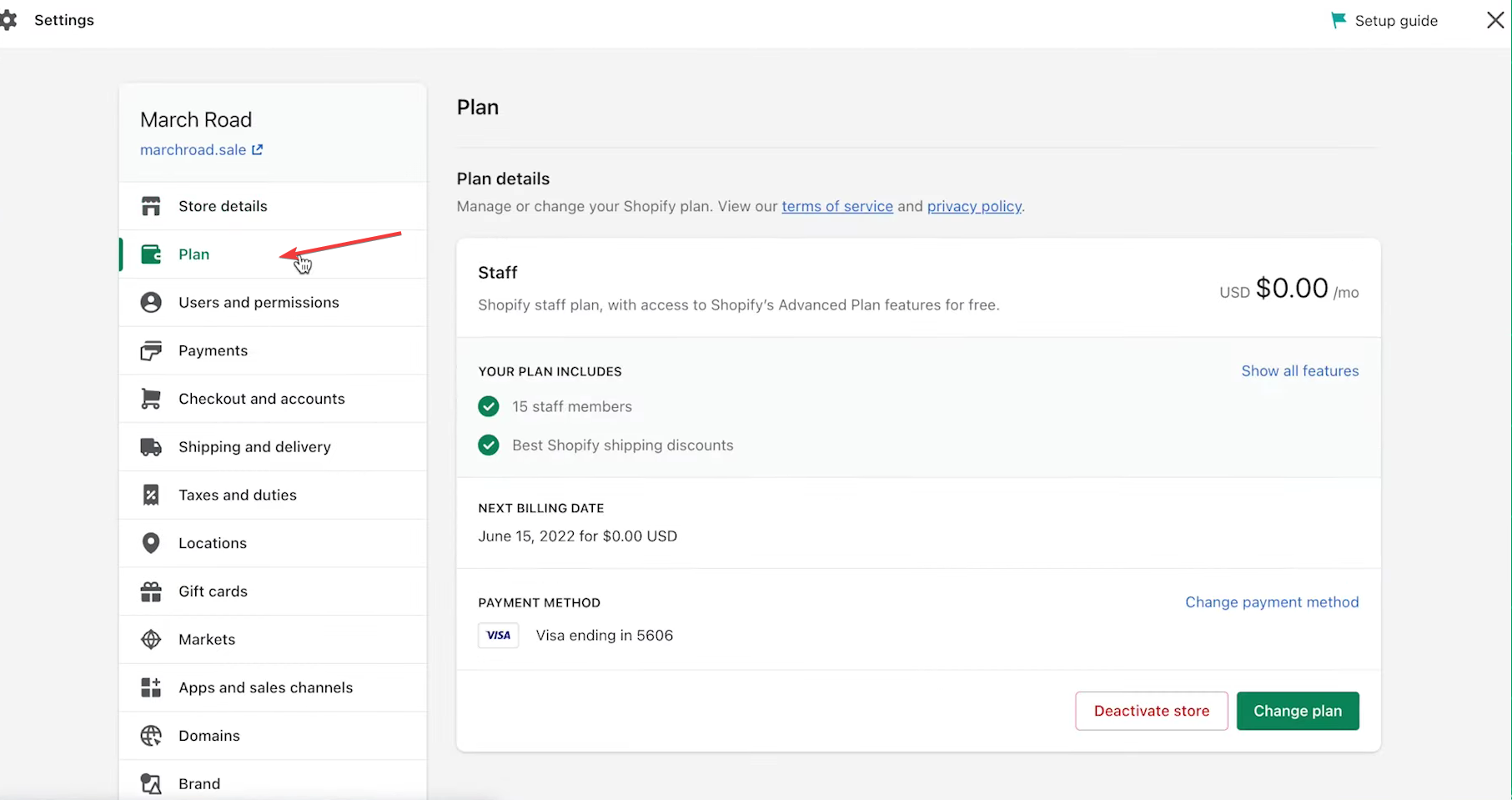
Click your account name in the top-right corner, then select Settings. From there, navigate to Plan or Billing, depending on your dashboard version. This section contains all the controls for your subscription.
Step 3: Select “Plan” or “Billing” Section
Here you can see your current plan, billing details, and payment methods. Review the information carefully. Understanding your billing cycle and features included in your plan ensures you won’t miss anything important when cancelling.
Step 4: Choose “Cancel Subscription”
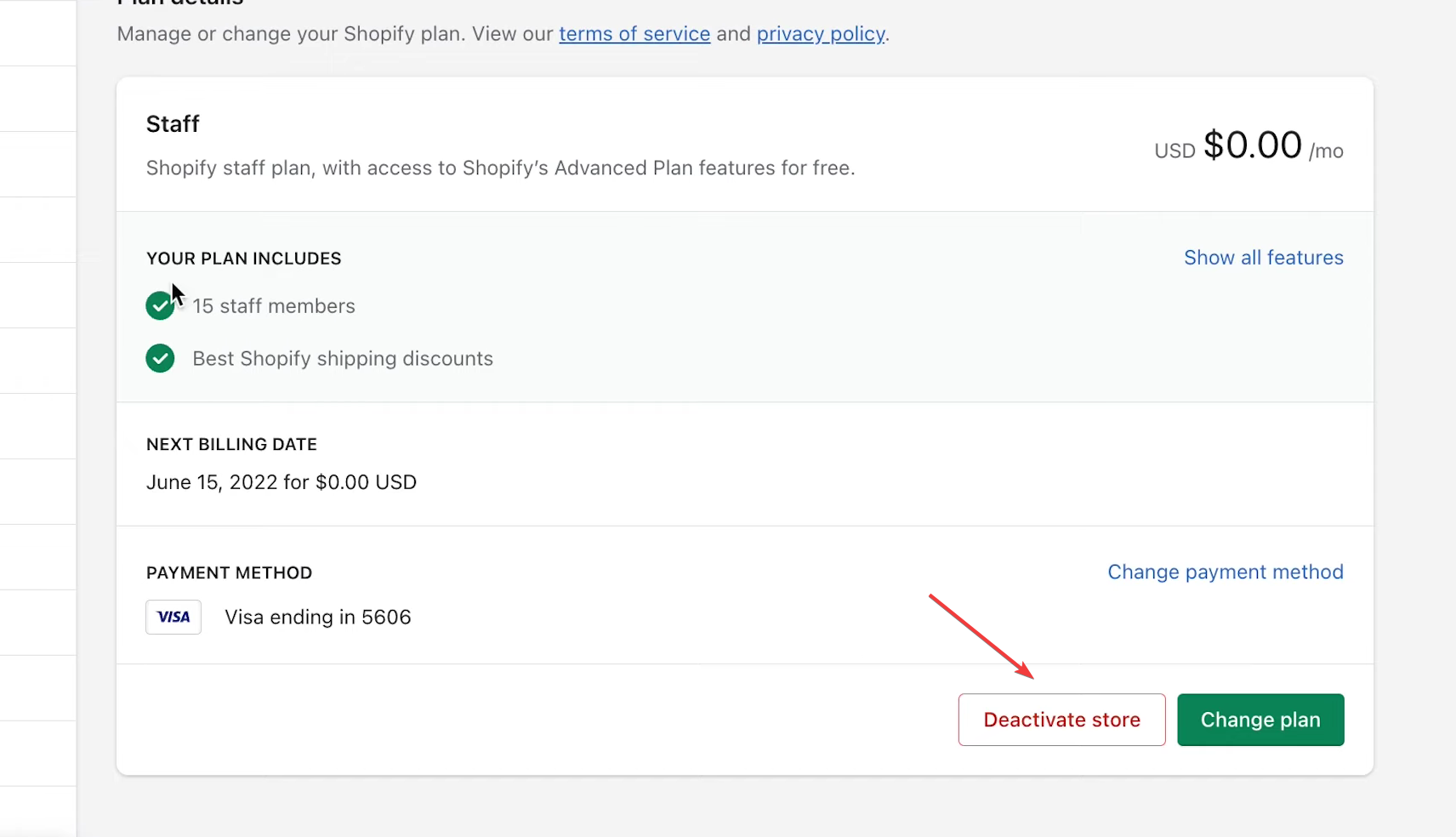
Click the Cancel Subscription or Close Store button. Shopify will guide you through the process, including steps to review your options and confirm the cancellation.
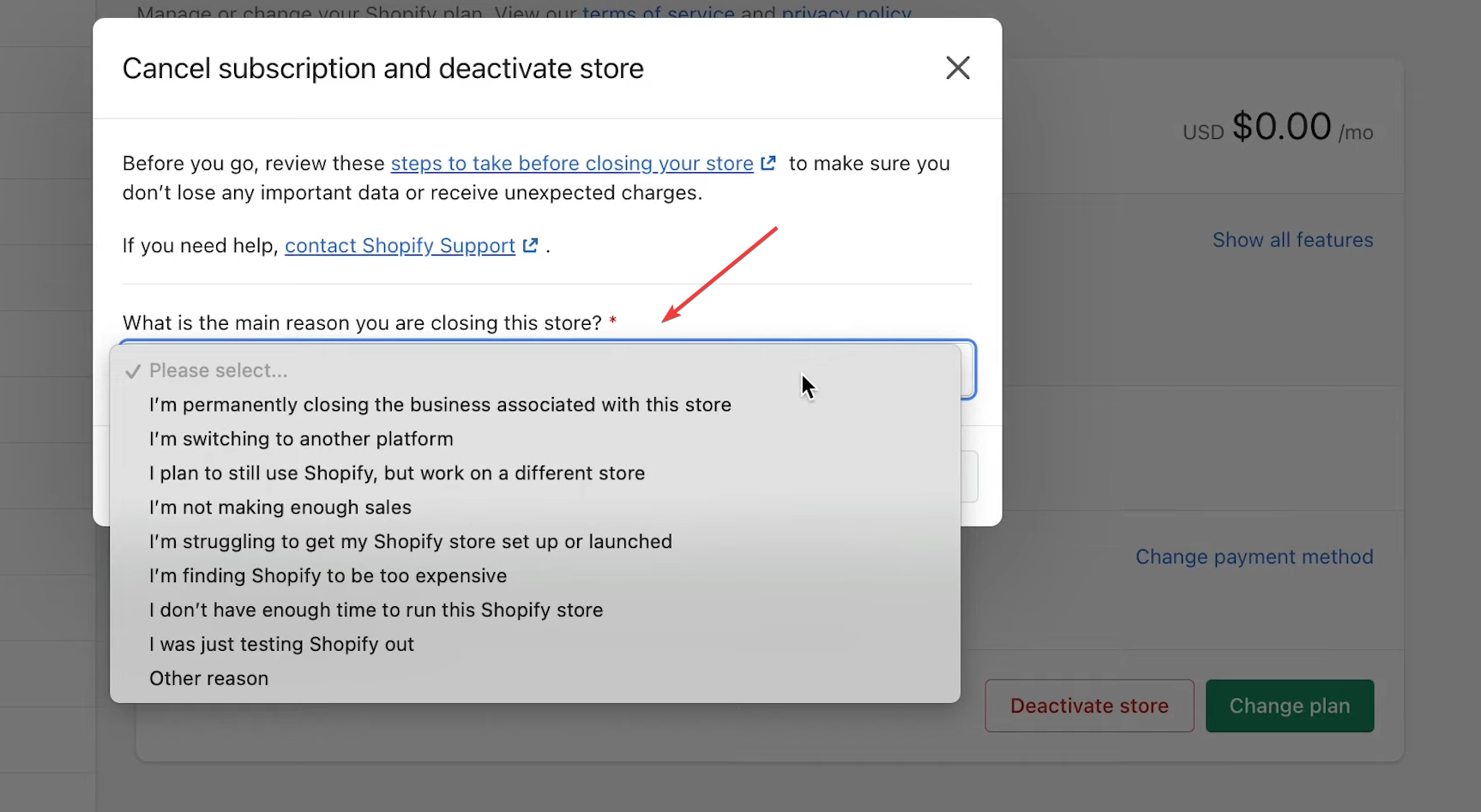
Step 5: Provide a Reason for Cancelling
Shopify requests a reason for cancellation to collect feedback. This is optional but selecting a reason helps Shopify understand why users leave, and it can highlight areas where the platform may improve. Be honest to ensure the process is smooth.
Step 6: Confirm Your Cancellation
Before finalizing, review all the details. Confirm any final charges, the date your subscription officially ends, and what access you will lose. Double-check that you’ve backed up your data.
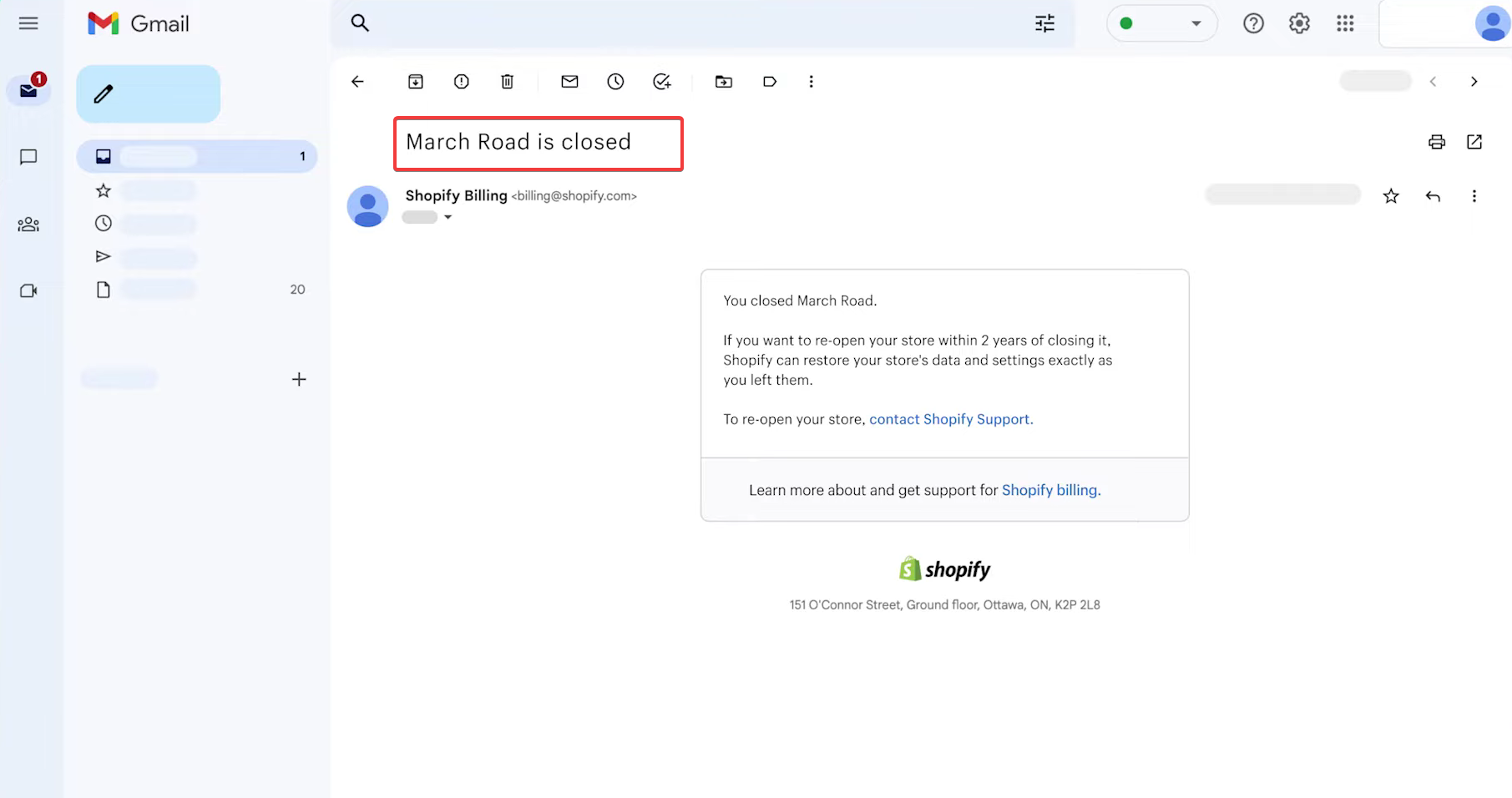
Step 7: Check for Confirmation Email and Final Charges
Once cancelled, Shopify will send a confirmation email. Keep this for your records. Verify the final charge matches your expectations and keep a copy of all communication in case of discrepancies.
Alternatives to Cancelling Your Shopify Subscription
Pause Your Shopify Store Temporarily
Pausing your store allows you to take a break without permanently shutting down. This option keeps your data intact, reduces costs, and gives you the flexibility to return when ready. You can resume full functionality later without rebuilding your store from scratch.
Downgrade to a Cheaper Plan
Downgrading is a great option if you want to maintain your store live but reduce monthly expenses. It’s ideal for small stores or businesses adjusting their budgets. Review what features might be limited on a lower plan and ensure it fits your business needs.
Export Your Store Data Before Leaving
Even if you’re fully cancelling, export all your products, customers, orders, and other data. This ensures a smooth transition if you decide to move to a different platform. Proper backups also protect your intellectual property and customer information.
What Happens After You Cancel Shopify Subscription
Access to Your Store After Cancellation
After cancellation, your store is no longer publicly accessible, but Shopify usually allows short-term access to export data. Make sure to complete all necessary downloads and note any important account details.
Refunds and Billing Information
Shopify generally does not provide refunds for partial months, so understanding your billing cycle is important. Any outstanding charges should be settled upon cancellation. Keep a record of all transactions to avoid billing confusion.
Reopening or Resuming Your Shopify Store
You can reactivate your store later by subscribing to a plan again. Note that some apps or settings may require reinstallation. If you have backups, restoring your store is much easier and ensures minimal downtime.
Conclusion
Summary of How to Cancel Shopify Subscription Safely
Cancelling Shopify doesn’t have to be intimidating. By backing up your data, checking billing, and carefully following the steps above, you can cancel your subscription safely. Consider alternatives like pausing or downgrading if cost or temporary needs are your main concern. Being prepared ensures a smooth transition and protects your business information.
Final Tips for a Smooth Cancellation Process
Double-check your billing cycle and final charges.
Keep multiple backups of your store data.
Read Shopify’s cancellation policy carefully to avoid surprises.
Explore alternatives like pausing or downgrading to maintain flexibility.
Document every step and confirmation for future reference.
Yes, you can cancel your Shopify subscription at any time through your admin dashboard. While you won’t typically receive a refund for the remaining days of your billing cycle, you can plan your cancellation to minimize costs and avoid extra charges.
2. Will I Lose My Store Data After Cancelling?
You will lose public access, but exporting your products, customer data, order history, and images before cancellation ensures nothing is lost. Keeping your data organized also makes it easier to migrate to another platform.
3. How Do I Avoid Being Charged After Cancelling?
Confirm cancellation through the Shopify admin and check for a confirmation email. Ensure your payment methods are updated, no automatic charges remain, and that the cancellation has been processed fully.
4. Can I Reopen My Shopify Store Later?
Yes, reactivation is possible by selecting a new plan. While most core data can be restored if exported, certain apps or custom settings may need reconfiguration. Planning ahead helps make the process seamless.
5. Are There Alternatives to Fully Cancelling My Shopify Subscription?
Yes, pausing the store or downgrading to a lower plan are both excellent options. They reduce costs while keeping data intact and give you flexibility to resume full operations in the future.
Most Shopify stores have no shortage of traffic. Paid social, Google Ads, influencers and marketplaces send thousands of visitors every month. Yet only a small fraction of these sessions end in a transaction. In many stores, conversion rates hover around a few percent – meaning the majority of visitors leave without buying.
Every one of these sessions generates behavioural data: which pages were visited, how long visitors stayed, which elements they clicked, when they abandoned the process. These signals are often treated as abstract analytics, instead of as concrete levers for revenue growth.
When behavioural data is systematically collected and activated, a Shopify store changes character. It stops being a static catalogue and becomes a responsive sales system: messages, recommendations and automations adapt to what visitors actually do. This article focuses on practical, Shopify-specific steps that turn browsing behaviour into measurable sales, rather than remaining at the level of general eCommerce theory.
From Abandoned Carts to Recovered Revenue
Cart abandonment is one of the clearest signs that a purchase almost happened. This section shows how Shopify stores can turn that moment of hesitation into a structured recovery process.
Key behaviour-based triggers in Shopify
Checkout is created and not completed within a defined time window
Cart reaches a certain value (e.g. over 100 €) and is then abandoned
Customer revisits the site with an active abandoned checkout
Shopify records these checkout events out of the box. With native abandoned checkout emails, Shopify Flow (on eligible plans) or dedicated apps, these events can fire automations instead of ending in silence.
A store can win back cart abandoners with, for example, tag customers with an open checkout above a certain value, feed this segment into an email tool and trigger follow-up messages as soon as the checkout is marked as abandoned. In many shops, 60–80% of started checkouts currently end without an order, so even a simple use of these triggers can unlock a visible revenue stream and form the basis for any win-back strategy.
A concrete 3-step recovery flow
Reminder after 1–2 hours
Reassurance after 24 hours
Selective incentive after 48–72 hours
In the first step, a reminder goes out roughly one to two hours after the checkout is abandoned. The email is simple: cart contents, product images, total price and one clear button back to the checkout page. No discount is needed here; the goal is to catch visitors who were merely interrupted by a phone call, a meeting or a lost connection.
If there is still no order after 24 hours, a second message focuses on reassurance rather than pressure. Short customer reviews, clear shipping times, a concise explanation of the returns process and visible trust badges answer the most common doubts about delivery, fit and reliability. Many abandoned carts are caused not by price, but by uncertainty.
Only in the third step, after 48–72 hours, and only for higher-value or high-margin carts, does a small incentive come into play. This can be free shipping or a modest percentage discount with a clear expiry. The intention is to convert genuinely hesitant but interested visitors without training all customers to wait for lower prices.
Additional channels such as SMS or push notifications are useful for logged-in customers or high basket values, while dynamic retargeting ads can show the exact products left behind. When such flows are implemented cleanly and monitored, recovered carts often contribute 5–15% of total monthly revenue, using traffic that has already been paid for.
Mapping the Browsing Journey: Understanding Behavioural Signals
To use behaviour for automation and personalisation, the underlying journey needs to be clear. This section focuses on how to read browsing patterns in a Shopify store.
Typical path through a Shopify store
Homepage or landing page → Collection page → Product page → Cart → Checkout → Thank you page
Key behavioural signals
Repeat product views over several days
Time on page and scroll depth on key product pages
Internal search queries via the Shopify search bar
Filter and sort usage on collection pages
Micro-conversions such as wishlists, size guide views or comparisons
In reality, visitors rarely move in a straight line from homepage to thank-you page. They land directly on deep product URLs from ads, jump between categories, use the search bar and exit at different stages. Mapping this path helps reveal where interest builds and where it breaks.
Repeat product views are one of the strongest signals. When the same visitor returns to a product two or three times within a week, there is usually clear intent, even if no cart is created yet. Long time on page and deep scrolling suggest active evaluation, while quick bounces indicate a mismatch between expectations and the content on the page.
Internal search queries are another source of insight. Terms entered into the Shopify search reveal how customers describe products in their own words and where the catalogue might not match that language. Frequent use of filters and sort options highlights which attributes — such as price, size or material — drive decisions in a given category.
Micro-conversions complete the picture. Adding items to a wishlist or favourites, opening size guides, downloading a lookbook or comparing products are all small commitments that show movement towards a purchase. These actions can be tracked through Shopify analytics, Google Analytics 4, server-side tracking or specialised apps.
Once these signals are documented and connected to user profiles where possible, the result is a practical journey map. It shows which behaviours mark high intent, where visitors most often leave, and which points in the journey should trigger messages, offers or additional information. This map becomes the blueprint for all segmentation and automation work that follows.
Behavioural Segmentation as the Foundation of Personalisation
Demographics alone rarely explain why someone buys. Behavioural segmentation looks at what visitors actually do in the shop and groups them accordingly. This section outlines concrete segments and how to use them.
Example segments with rules and actions
High-intent browsers
Rule: At least 3 product page views in 7 days, at least 1 add-to-cart, no order placed
Action: Add to a “High intent – no purchase” segment in the email tool
Price-sensitive visitors
Rule: Used “sort by price (low to high)” in at least 2 sessions in 30 days or visited the “Sale” collection at least twice
Action: Emphasise bundles, promotions and clear price anchors in on-site banners and email
Loyal browsers / emerging VIPs
Rule: At least 5 sessions in 60 days and at least 1 previous purchase
Action: Include in early access campaigns, personalised recommendations and loyalty programmes
Behavioural segmentation starts with selecting a few meaningful segments like these, rather than trying to cover every possible pattern. High-intent browsers have already shown clear interest but have not yet ordered. Collecting them in a dedicated segment makes it possible to send targeted reminders, additional information or reassurance without relying on broad campaigns.
Price-sensitive visitors reveal themselves by their constant focus on low prices and sale pages. For this group, content that stresses value, bundle savings or time-limited promotions is more effective than generic brand messaging. On-site, they might see banners that point directly to deals; in email, they benefit from clear comparison of “regular vs. bundle” pricing and a straightforward explanation of savings.
Loyal browsers or emerging VIPs visit frequently, read thoroughly and often have at least one past order behind them. They are ideal recipients for early access to new collections, restock notifications and more in-depth content about the brand. Instead of pushing discounts, communication here can focus on exclusivity, product insight and long-term relationship building.
Tailored messaging by segment
Once such segments exist, campaigns become more specific without necessarily becoming more complex. High-intent browsers receive reminders, FAQs and product education instead of general newsletters. Price-sensitive visitors see concrete offers with clear value explanations instead of broad branding-only emails. Loyal customers are informed about restocks, new drops and background stories that reinforce their connection to the brand.
In practice, this means that the same promotion or product launch can be framed differently for each group, using the same underlying assets but adjusted subject lines, hero sections and call-to-action placement. Behavioural data thus leads to differentiated experiences without having to build completely separate campaigns for every audience.
On-Site Experience: Turning Browsing Data Into Dynamic Shop Interactions
On-site behaviour has the biggest impact when it directly shapes what visitors see in the shop. This section shows how browsing data can be used to make Shopify storefronts feel more relevant and helpful in real time.
Smarter product recommendations
Well-configured recommendations help visitors continue where they left off and discover products that genuinely fit their interests.
Examples of data-driven recommendations
Recently viewed products on the homepage and cart page
Similar items based on category, tags or metafields (same brand, similar material, matching style)
“Frequently bought together” blocks on product pages and in the cart
Instead of relying on a single carousel of generic bestsellers, Shopify stores can use browsing data to power more precise recommendation blocks. Recently viewed products on the homepage and cart page remind visitors of items they considered earlier and make it easy to return to them without searching again. Similar items work well on product pages: if someone spends time on a particular running shoe, the shop can highlight shoes from the same brand, with similar cushioning or for the same use case.
“Frequently bought together” blocks are particularly effective close to the cart and on the product page. By combining browsing history with past order data, the shop can suggest logical add-ons such as socks for running shoes or cases for electronic devices. Many recommendation apps for Shopify allow rules that prioritise specific collections, brands or margin levels, so the suggestions stay profitable as well as relevant.
Contextual messaging and helpers
Short, targeted messages can remove friction and answer questions if they appear at the right moment and in the right place.
Examples of contextual on-site elements
Campaign-specific banners for visitors coming from certain ads or landing pages
Size and fit guides shown more prominently for products with high return rates
Welcome incentives for first-time visitors; trust-focused messages for returning visitors
Browsing data indicates what a visitor cares about and where help is needed. If someone arrives via a performance campaign for a new running collection, a banner that highlights free returns on running shoes or a “Shop the campaign” entry point makes the next step obvious. Products with many returns because of sizing issues benefit from clearly visible size and fit guides, especially for people who already interacted with such guides on other items.
First-time visitors often need a simple nudge to make the first purchase, such as a gentle welcome incentive shown only after they have visited several pages. Returning visitors, on the other hand, react better to reassurance about delivery speed, stock levels and loyalty benefits. Shopify themes and apps can conditionally display different messages based on whether someone is new, logged in or has a certain browsing history.
Exit-intent and scroll-based prompts
Prompts work best when they appear at a moment of decision instead of interrupting visitors as soon as the page loads.
Typical triggers for smarter prompts
Scroll depth exceeds a set threshold without interaction
Cursor moves towards the browser bar or back button on desktop
Session reaches a defined time limit without any cart activity
By tying prompts to scroll depth, cursor movement or session duration, a store avoids generic pop-ups that appear the second a page loads. For example, a newsletter sign-up can appear only when someone has scrolled 60–70% through a guide or a collection page, indicating real interest. Exit-intent technology can recognise when the cursor moves towards the close or back button and present a final, focused message, such as a reminder about items in the cart or a short FAQ about shipping and returns.
If a visitor browses several products for a few minutes without adding anything to the cart, a subtle prompt can offer help (“Need sizing advice?”) rather than a discount. Consistent visual design and tone across all prompts ensure that personalisation supports the brand experience instead of feeling random or intrusive.
Beyond the Cart: Behaviour-Driven Email and Retargeting Flows
Behavioural data becomes even more valuable when it shapes what happens after visitors leave the site. This section covers how browsing signals feed into email flows and retargeting campaigns that go beyond classic cart recovery.
Browse abandonment flows
Browse abandonment flows focus on visitors who showed strong interest in specific products but never added them to the cart.
Typical browse abandonment setup
Trigger: Product in a priority collection (top sellers, high-margin items) viewed at least twice in 7 days, no purchase
Email 1: Reminder with main benefit, key specification and direct link back to the product page
Email 2: Additional context such as comparisons, styling ideas or use cases
Optional email 3: Reviews or FAQs that address common objections
In practice, this means tracking which priority products a visitor views more than once within a short time frame. When the rule is met and no order is placed, the email platform sends a first reminder that simply resurfaces the product, explains the main benefit in one or two lines and links back to the detail page.
If there is still no purchase, a second email adds more depth. This might compare the product with similar items in the range, show how it can be styled or used, or highlight a few concrete benefits instead of general marketing language. An optional third email can pull in authentic reviews or answer frequently asked questions about quality, sizing, installation or care. The goal is to support the decision, not to pressure the recipient.
Category-specific sequences
Category-specific sequences are useful when visitors keep returning to the same type of product, but never settle on a specific item.
Example of a category flow
Trigger: At least three product views in the same category (e.g. “Running” or “Accessories”) within 14 days
Email 1: Bestsellers and top-rated products in that category
Email 2: Educational content such as care tips, usage ideas or buying guides, plus selected recommendations
Email 3: Soft promotion with a bundle suggestion or complementary items
These flows treat a category as a theme and help visitors orient themselves within it. If someone repeatedly browses running gear, the first email in the sequence can show a curated set of bestsellers and customer favourites. The second email then takes a more advisory tone: explaining differences between models, giving care instructions or outlining which product fits which use case. The final email can highlight bundles or complementary products that make sense in that category, without forcing a hard sale.
Behaviour-informed retargeting
Retargeting campaigns reach visitors on platforms such as Facebook, Instagram and Google Ads based on what they did on the site.
Useful audiences for behaviour-based retargeting
Viewed products in a category but did not add to cart
Abandoned carts above a defined value threshold
Purchased from one category but frequently browsed another
Shopify can send these audiences to ad platforms through pixels or server-side integrations. If someone viewed several products in a category without adding anything to the cart, ads can show a small selection of those items or the most popular products in that category. Visitors who abandoned well-filled carts can see creatives that remind them of the items left behind or that highlight flexible returns and secure checkout.
Customers who bought from one category but often browse another are good candidates for cross-sell campaigns. Ads can present the new category in a low-pressure way, such as “Complete your look” or “You may also like”, based on prior browsing. Aligning ad creatives with concrete behaviours reduces wasted impressions and creates a clear connection between on-site experience and off-site advertising.
7. Measurement Framework: Translating Behaviour Into KPIs
A behavioural strategy only delivers value if its impact is visible in the numbers. This section outlines which KPIs help evaluate browsing-based tactics and how to use them in day-to-day decisions.
Core metrics
Core metrics show whether behavioural measures actually increase revenue and efficiency.
Key core metrics
Conversion rate per segment
Revenue per visitor (RPV)
Recovered revenue from cart and browse flows
Segment-level conversion rates reveal how well different behavioural groups perform compared to the overall average. If high-intent browsers still convert poorly, the problem may lie in the offer or in missing reassurance rather than in traffic quality. Revenue per visitor shows how much value each session generates and is therefore a good way to measure the effect of personalisation even when traffic levels change.
Recovered revenue focuses specifically on automations such as cart and browse abandonment flows. Many stores set a realistic target of 5–15% of monthly revenue coming from these flows after a few months of optimisation. Monitoring this share makes it easier to justify the time and budget invested in behaviour-based messaging.
Supporting metrics
Supporting metrics describe how people interact with behavioural elements and where friction might occur.
Useful supporting metrics
Click-through rates on recommendation blocks and on-site prompts
Revenue per email or per SMS for each behavioural flow
Unsubscribe and spam complaint rates for behavioural emails
If click-through rates on recommendation blocks are low, the logic behind the suggestions may need adjustment, or the placement may not be prominent enough. Revenue per email or SMS indicates which flows pull their weight and which ones merely add noise. Unsubscribe and complaint rates highlight where frequency, timing or tone are off. As a simple rule of thumb, behavioural flows that consistently generate complaint or unsubscribe rates above about 1% should be reviewed and refined.
Cohort and A/B testing
Cohort analysis compares groups of customers over time, while A/B testing improves specific parts of the setup.
Dimensions for cohort analysis and testing
Lifetime value and repeat purchase rate by cohort (behavioural flow vs. non-flow customers over 6–12 months)
Subject lines and send times for key automations
Incentive levels and conditions (e.g. only for high-value carts)
Positioning and content of dynamic on-site elements
Grouping customers into cohorts based on whether they interacted with behavioural flows allows a store to see if those flows lead to higher lifetime value or more repeat orders. This is more informative than looking only at the first purchase. At the same time, A/B tests should run continuously on manageable aspects such as subject lines, send times or the position of recommendation blocks on the page. The aim is not to change everything at once, but to gradually refine the most important levers and build a habit of structured experimentation.
Practical Roadmap and Common Pitfalls
Behaviour-based optimisation can feel complex at first. A simple roadmap helps to break the work into clear steps and avoid the most common mistakes.
Step-by-step roadmap
A staged approach keeps projects manageable and makes it easier to see progress.
Ensure consistent tracking in Shopify analytics and connected tools
Launch essential flows
Implement a 2–3-step cart abandonment flow
Add a basic browse abandonment flow for top products or categories
Introduce basic segmentation
Build segments such as high-intent browsers, price-sensitive visitors and loyal customers
Adapt email content and on-site messages to each segment
Roll out on-site personalisation
Start with “recently viewed” and “similar products” recommendations
Add contextual banners for key categories or campaigns
Refine based on data
Review KPIs monthly and identify segments or flows with the highest leverage
Run focused A/B tests and adjust thresholds, messaging and incentives
In practice, this means starting with a short list of events instead of trying to track everything. Product views, search queries, add-to-cart actions and checkout steps are usually enough for the first phase. Once these are flowing reliably into analytics and the email platform, the store can switch on simple cart and browse abandonment flows and check weekly how much revenue they generate.
Basic behavioural segments come next. Grouping visitors into high-intent, price-sensitive and loyal segments allows the same campaigns to be framed differently. When the first results look stable, simple on-site personalisation elements such as recently viewed products and contextual banners can be layered on top. A monthly review of the core and supporting metrics then guides which flows or segments should be tested and refined next, avoiding random changes.
Common pitfalls
Some mistakes show up again and again when stores begin to work with behavioural data. Knowing them in advance makes them easier to avoid.
Typical pitfalls to watch out for
Over-automation without a clear plan
Dependence on constant discounts
Neglect of data quality and privacy
Over-automation happens when new flows, prompts and pop-ups are added without a simple strategy. Visitors then experience the shop as noisy and inconsistent, and internal teams lose track of what is live. A smaller number of well-designed automations, documented in a simple overview, usually performs better.
Discount addiction is another risk. If every behavioural flow includes a coupon, customers quickly learn to abandon carts on purpose or to wait for the next code. Incentives work best when they are conditional (for example, only for high-value carts or specific segments) and when most flows focus on clarity and reassurance instead.
Finally, behavioural projects depend on clean data and transparent consent. Broken tracking, missing information about opt-in and unclear privacy practices distort insights and can create legal risk. Before scaling more complex set-ups, it is worth checking that events are recorded accurately, consent mechanisms are clear and documentation is up to date.
Conclusion: Behaviour as the Most Reliable Growth Signal
Browsing behaviour is one of the most concrete indicators of buying intent available to a Shopify store. When this data is mapped, segmented and activated – from abandoned cart recovery to browse flows and on-site personalisation – existing traffic turns into a more predictable and scalable revenue source.
Rather than constantly increasing ad spend, stores that treat behaviour as a strategic asset learn to extract more value from each visit. The result is not only higher conversion rates, but stronger customer relationships and more stable growth. In a market where acquisition costs continue to rise, behaviour-driven optimisation often marks the difference between short-lived spikes and sustainable eCommerce success.
Harald Neuner is co-founder of ‘uptain’, the leading software solution for the recovery of shopping basket cancellations in the DACH region. He is particularly keen to provide small and medium-sized online shops with technologies that were previously only available to the big players in e-commerce. With ‘uptain’, he has been able to do just that.
Introduction — Why Hiring a Shopify Partner Can Transform Your Entire Project
A Shopify Partner is more than just a freelancer who knows their way around an online store. They’re certified experts deeply connected to the Shopify ecosystem—and if you’re planning your next ecommerce project, working with Shopify partners can genuinely save you time, money, frustration, and a whole lot of trial-and-error. In today’s hyper-competitive market, having someone who truly understands conversion-focused design, strategic ecommerce growth, and Shopify’s technical landscape can be the difference between a store that simply exists… and a store that performs at the level you dream of. When you choose to work with partners, Shopify-certified or experienced Shopify development partners, you’re not just hiring “help.” You’re bringing in someone who has already walked the path many times and knows exactly how to guide you around common mistakes. And if you’re looking for a trusted partner with a real track record of helping business owners grow, Atamgo offers Shopify services designed for brands that want results, clarity, and long-term success.
Working with a certified Shopify Partner means you’re hiring someone Shopify themselves trusts. These professionals train directly on the platform’s best practices, recommended workflows, and technical standards. Their skillset isn’t based on guesswork—it’s based on real training.
Why Certification Guarantees Higher Quality Work
Certification means a predictable, higher-quality outcome. Instead of gambling with someone who may or may not understand Shopify’s unique structure, you can rely on a partner who has already demonstrated expertise. That’s a major reason businesses prefer partners shopify verified—they get consistency, stability, and cleaner results.
Shopify has a massive ecosystem—hundreds of apps, thousands of themes, and a constant stream of updates. Navigating it alone can be overwhelming. A Shopify Partner already knows the best combinations for your industry, your niche, and your business model.
Staying Updated With the Latest Shopify Features
The ecommerce world evolves constantly. Shopify Partners stay ahead of Shopify’s new tools, performance upgrades, and feature rollouts so your store is always modern, fast, and competitive.
3. Professional Store Setup That Converts
Optimized Theme Selection
A good-looking theme isn’t enough. You need a fast, conversion-focused theme that supports your business model and enhances your customer journey. A Shopify Partner helps you make that decision strategically.
Conversion-Focused Store Architecture
Your homepage, product page, cart, and checkout aren’t just pages—they’re sales machines. Shopify Partners know exactly how to structure each section to reduce friction and encourage sales. Atamgo’s Shopify experts use industry-backed techniques to build layouts that convert more of your traffic into paying customers.
4. Custom Design That Matches Your Brand
UX/UI Design Tailored to Your Audience
Your store’s design isn’t just visual—it’s emotional. A Shopify Partner crafts a user experience that feels natural, engaging, and aligned with your brand identity.
Mobile-first Shopify Store Design
With over 70% of shoppers browsing on mobile, your store must feel great on every device. Shopify Partners make sure your website flows smoothly, loads quickly, and offers an effortless mobile experience.
5. Advanced Shopify Development Capabilities
Custom Coding & Liquid Development
Shopify’s Liquid language is powerful but can be confusing for beginners. Shopify development partners understand how to build advanced features, custom templates, personalized sections, and high-performance elements.
Building High-Performance Store Features
Whether you want custom upsells, product bundles, advanced filters, or a fully personalized shopping flow, a Shopify Partner can build features that elevate your brand beyond “cookie-cutter” stores.
6. Faster Turnaround Times With Fewer Mistakes
Proven Processes & Workflows
Experienced Shopify Partners have systems. They don’t guess. They follow proven processes that keep your project organized, on schedule, and error-free.
Avoiding Costly DIY Errors
Fixing a broken store costs more than building one correctly from the beginning. Many business owners hire a partner after trying to do things alone—and realizing that DIY mistakes can cripple performance.
7. Ongoing Support After Your Store Launch
Maintenance, Updates & Bug Fixes
The launch is just step one. A professional Shopify Partner stays to keep your store updated, fast, secure, and problem-free.
Long-Term Partnership Benefits
Working with someone who knows your business saves time, speeds up updates, and ensures better results. Atamgo offers long-term support packages designed to keep your Shopify store running smoothly while you focus on growth.
8. Better App Recommendations & Integrations
Choosing the Right Apps for Your Store
The Shopify App Store is overwhelming. But Shopify Partners already know which apps perform well, which ones slow your site down, and which ones are complete overkill.
Avoiding App Overload & Performance Issues
Too many apps = slow speed + low conversions. Partners help you keep your store lightweight, fast, and optimized while still giving you the functionality you need.
9. Data-Driven Optimization for Higher Conversions
CRO, Speed Optimization & Analytics
Conversion Rate Optimization (CRO) isn’t guesswork. A Shopify Partner analyzes your traffic, your customer behavior, and your funnel to improve performance.
A/B Testing & Real Store Performance Insights
Great stores are built through experimentation. By testing different layouts, offers, and designs, a Shopify Partner helps you discover what truly works.
10. Increased ROI and Long-Term Business Growth
How Shopify Partners Help You Scale
Growth isn’t random—it’s engineered. Shopify Partners guide you with insights from dozens or even hundreds of previous projects.
Real Results From Professional Implementation
When your store loads faster, flows better, and feels more premium, sales start to climb. Atamgo’s Shopify partner-level services ensure your store doesn’t just look good—it performs.
Conclusion — Why a Shopify Partner Is the Smartest Choice for Your Next Project
A Shopify Partner brings strategy, technical mastery, design experience, and a deep understanding of what makes ecommerce stores convert. Whether you’re launching a new brand or scaling an existing one, bringing in a certified expert ensures your store is built the right way from day one. If you’re ready to build, optimize, and grow with confidence, Atamgo is here to support you every step of the way.
A Shopify Partner helps businesses build, optimize, and scale their Shopify stores using expert knowledge, trained methodologies, and ecommerce best practices.
2. How much does it cost to hire a Shopify Partner?
Costs depend on the project size, features needed, and partner experience. Small tasks can be affordable, while full custom builds can require larger budgets.
3. Is a Shopify Partner better than a regular freelancer?
Yes. Certified partners follow Shopify’s standards, use professional workflows, and deliver more consistent results.
4. How do I choose the right Shopify Partner for my project?
Review their portfolio, communication style, reviews, and previous results. Make sure they understand your business goals.
5. Can a Shopify Partner help improve my store’s sales and conversions?
Absolutely. Through CRO, analytics, speed optimization, and strategic design changes, Shopify Partners boost conversions and revenue.
Introduction — Understanding the Magento vs Shopify Debate in 2026
Magento vs Shopify has become one of the most talked‑about comparisons in the e‑commerce world, and honestly, it’s easy to see why. As we step into 2026, businesses aren’t just choosing a platform — they’re choosing the ecosystem that will shape their growth, branding, marketing, and even day‑to‑day sanity. Whether you’re looking at Shopify vs Magento for your very first online store or you’re considering a switch from your current setup, this conversation matters more than ever. Both platforms have evolved massively, bringing new tools, new opportunities, and yes — new challenges.
The truth is, most business owners are overwhelmed not because the platforms are complicated, but because the decision feels permanent. And while nothing in tech is ever truly permanent, the time and money you invest in e‑commerce definitely is. Before we dive in, a tiny note: if you ever end up choosing Shopify and want serious help with SEO, conversion, or scaling, my team at Atamgo offers specialized Shopify SEO services. But for now, let’s break everything down clearly.
Why Choosing the Right E-commerce Platform Matters More Than Ever
The digital landscape today is louder, faster, and more competitive. Consumers expect speed, personalization, great UX, smooth checkout, and trust. Your e‑commerce platform affects all of this — even if you’re not thinking about it right now. The platform you choose impacts your SEO foundation, mobile performance, content flexibility, scalability, integration possibilities, and even the type of talent you need to hire.
Magento vs Shopify 2026: What’s New, What’s Changed, and Why It Matters
A lot changed in the last couple of years. Shopify introduced more AI automations, better checkout extensibility, stronger SEO features, and improved storefront customization. Magento (Adobe Commerce) doubled down on enterprise‑grade flexibility, backend power, and sophisticated workflows for huge catalogs and complex operations. Your choice isn’t just technical — it’s strategic.
Insight #1 — Magento vs Shopify Market Position in 2026
Adoption Trends, Growth, and Platform Popularity
Shopify continues dominating the SMB and mid‑market because of its reliability and ease. From small dropshippers to 8‑figure DTC brands, Shopify offers a clean path to growth. Magento, however, remains a go‑to for enterprise merchants who need deep customization and internal systems integration.
How Merchant Needs Are Driving the Shift
A noticeable trend is the number of businesses migrating from Magento to Shopify. They’re choosing lower costs, less technical maintenance, and faster time‑to‑market. But at the same time, enterprise merchants who require advanced multi‑store setups, complex customer segmentation, or custom logic still lean toward Magento.
Insight #2 — Ease of Use: Which Platform Is Simpler in 2026?
Store Setup Experience Comparison
If you want speed, Shopify wins easily. Create a store, pick a theme, install apps, and go live — sometimes within 24 hours. Magento, by nature, requires developers, server setup, and careful planning. It’s more of an engineering project than a plug‑and‑play experience.
Dashboard, Usability, and Daily Management
Shopify’s dashboard is clean, intuitive, and beginner‑friendly. Everything feels simple. Magento’s dashboard is richer, with deeper capabilities and more configurable areas — great for teams who know what they’re doing, but intimidating for beginners.
Insight #3 — Customization Power: Magento’s Flexibility vs Shopify’s Simplicity
Themes, Layout Control, and Design Freedom
Magento is the playground for developers who want absolute freedom. Custom workflows, custom UI, custom business rules — anything is possible. Shopify, while more limited, still offers plenty of customization through Online Store 2.0, sections everywhere, and theme flexibility.
When You Really Need Magento-Level Customization
Some businesses simply outgrow simple setups. Magento is ideal when you need:
Multi‑store architecture on one backend
Advanced B2B features
Large product catalogs with complex attributes
Fully customized checkout logic
Deep ERP or inventory automation
Insight #4 — App Ecosystem and Extensions in 2026
Shopify App Store Upgrades
The Shopify App Store in 2026 is massive. Thousands of apps help store owners automate SEO, marketing, customer service, personalization, fulfillment, and more. Most apps are plug‑and‑play, making enhancements accessible even for non‑technical users.
Magento Marketplace Add-ons You Can’t Ignore
Magento extensions are more powerful but require technical installation. You’re not just clicking “install” — you’re integrating. This makes it more suitable for enterprises that need heavy customization and have developer teams.
Insight #5 — Performance, Speed, and Scalability
Magento vs Shopify Speed Benchmarks in 2026
Shopify generally delivers faster load times because the hosting environment is fully managed. Magento performance varies depending on hosting, caching strategies, and development quality.
Handling High Traffic During Growth or Sales Seasons
Shopify can handle large spikes without additional server management. Magento can also scale to extreme levels but requires engineering support. For huge enterprises, that control is priceless; for smaller businesses, it’s unnecessary.
Insight #6 — SEO Capabilities Comparison
Built-in SEO Tools and Control
Shopify offers solid SEO fundamentals — clean URLs, sitemaps, redirects, meta control, image optimization, etc. But it limits changes to deeper technical structures. Magento, meanwhile, gives total control to developers.
Advanced SEO Scenarios Where Magento Still Leads
Magento is powerful for:
Complex product filtering
Multi‑store multilingual SEO
Large catalogs needing advanced indexing
Custom category structures
But Shopify is catching up fast. And if you choose Shopify and want expert SEO strategy, Atamgo can support you from day one.
Insight #7 — Payment Options and Transaction Fees
Shopify Payments vs Third-Party Gateways
Shopify Payments is widely available now and cheaper than using third‑party gateways. But if merchants choose PayPal or other gateways, Shopify still takes a fee.
Magento Payment Flexibility and Global Options
Magento allows any payment gateway integration with full control — perfect for enterprises operating in multiple countries.
Insight #8 — Security Features and Compliance
Security Responsibilities on Magento vs Shopify
Shopify manages hosting, security patches, PCI compliance, and most safety concerns. Magento requires merchants to handle everything themselves.
Updates, Patches, and Data Protection in 2026
Magento’s power comes with responsibility — frequent patches, developer maintenance, and manual updates. Shopify removes that burden entirely.
Insight #9 — Pricing Breakdown and Total Cost of Ownership
Shopify Subscription and App Costs
Shopify’s pricing is predictable, starting with monthly plans. However, app costs can accumulate if you rely heavily on add‑ons.
Magento Hosting, Development, and Maintenance Costs
Magento is significantly more expensive. Beyond hosting, you need developers for theme updates, bug fixes, security, and customization. It’s ideal only when you truly need enterprise‑level flexibility.
Insight #10 — Ideal Business Types for Each Platform
Who Should Choose Shopify in 2026
Shopify is perfect for:
Startups and new e‑commerce owners
Growing brands
Dropshippers
DTC businesses
Anyone wanting simplicity, speed, and lower costs
Who Should Choose Magento in 2026
Magento is best for:
Large enterprises
Complex inventory or catalog structures
Multi‑store operations
Businesses needing complete control over logic and design
Teams with strong development resources
Insight #11 — Future Outlook: Which Platform Will Win Beyond 2026?
Innovation, AI Tools, and Automation
Shopify is investing heavily in merchant‑facing AI, predictive analytics, and automated optimization. Magento, backed by Adobe, continues building enterprise‑grade features.
Where Magento and Shopify Are Heading
Shopify will keep dominating the SMB and mid‑market. Magento will continue serving enterprise brands that prioritize flexibility over simplicity.
Conclusion — Making the Smart Choice Between Magento vs Shopify
There’s no universal “best” platform — only the best platform for your business model. Shopify wins for ease, cost, and speed. Magento wins for complexity, control, and enterprise‑grade customization.
And if you choose Shopify and want to scale with strong SEO, UX guidance, or long‑term optimization, Atamgo.com is here to help you grow sustainably.
FAQs
1. Is Shopify cheaper than Magento in the long run?
Yes. Shopify offers predictable pricing, while Magento comes with ongoing developer and hosting expenses.
2. Is Magento better for enterprise stores in 2026?
Absolutely. Magento (Adobe Commerce) still leads when it comes to enterprise‑level customization and infrastructure.
3. Can Shopify handle large catalogs like Magento?
Shopify can handle large catalogs well, though Magento remains better for extremely complex catalog requirements.
4. Which platform is better for SEO in 2026?
Magento offers more technical flexibility, while Shopify is easier to optimize with the right strategy.
5. Should beginners start with Shopify or Magento?
Shopify, without hesitation. It’s beginner‑friendly, affordable, and quick to launch.
Introduction — Understanding the Magento vs Shopify Debate in 2026
Magento vs Shopify has become one of the most talked‑about comparisons in the e‑commerce world, and honestly, it’s easy to see why. As we step into 2026, businesses aren’t just choosing a platform — they’re choosing the ecosystem that will shape their growth, branding, marketing, and even day‑to‑day sanity. Whether you’re looking at Shopify vs Magento for your very first online store or you’re considering a switch from your current setup, this conversation matters more than ever. Both platforms have evolved massively, bringing new tools, new opportunities, and yes — new challenges.
The truth is, most business owners are overwhelmed not because the platforms are complicated, but because the decision feels permanent. And while nothing in tech is ever truly permanent, the time and money you invest in e‑commerce definitely is. Before we dive in, a tiny note: if you ever end up choosing Shopify and want serious help with SEO, conversion, or scaling, my team at Atamgo offers specialized Shopify SEO services. But for now, let's break everything down clearly.
Why Choosing the Right E-commerce Platform Matters More Than Ever
The digital landscape today is louder, faster, and more competitive. Consumers expect speed, personalization, great UX, smooth checkout, and trust. Your e‑commerce platform affects all of this — even if you’re not thinking about it right now. The platform you choose impacts your SEO foundation, mobile performance, content flexibility, scalability, integration possibilities, and even the type of talent you need to hire.
Magento vs Shopify 2026: What’s New, What’s Changed, and Why It Matters
A lot changed in the last couple of years. Shopify introduced more AI automations, better checkout extensibility, stronger SEO features, and improved storefront customization. Magento (Adobe Commerce) doubled down on enterprise‑grade flexibility, backend power, and sophisticated workflows for huge catalogs and complex operations. Your choice isn’t just technical — it’s strategic.
Insight #1 — Magento vs Shopify Market Position in 2026
Adoption Trends, Growth, and Platform Popularity
Shopify continues dominating the SMB and mid‑market because of its reliability and ease. From small dropshippers to 8‑figure DTC brands, Shopify offers a clean path to growth. Magento, however, remains a go‑to for enterprise merchants who need deep customization and internal systems integration.
How Merchant Needs Are Driving the Shift
A noticeable trend is the number of businesses migrating from Magento to Shopify. They’re choosing lower costs, less technical maintenance, and faster time‑to‑market. But at the same time, enterprise merchants who require advanced multi‑store setups, complex customer segmentation, or custom logic still lean toward Magento.
Insight #2 — Ease of Use: Which Platform Is Simpler in 2026?
Store Setup Experience Comparison
If you want speed, Shopify wins easily. Create a store, pick a theme, install apps, and go live — sometimes within 24 hours. Magento, by nature, requires developers, server setup, and careful planning. It’s more of an engineering project than a plug‑and‑play experience.
Dashboard, Usability, and Daily Management
Shopify’s dashboard is clean, intuitive, and beginner‑friendly. Everything feels simple. Magento’s dashboard is richer, with deeper capabilities and more configurable areas — great for teams who know what they’re doing, but intimidating for beginners.
Insight #3 — Customization Power: Magento’s Flexibility vs Shopify’s Simplicity
Themes, Layout Control, and Design Freedom
Magento is the playground for developers who want absolute freedom. Custom workflows, custom UI, custom business rules — anything is possible. Shopify, while more limited, still offers plenty of customization through Online Store 2.0, sections everywhere, and theme flexibility.
When You Really Need Magento-Level Customization
Some businesses simply outgrow simple setups. Magento is ideal when you need:
Multi‑store architecture on one backend
Advanced B2B features
Large product catalogs with complex attributes
Fully customized checkout logic
Deep ERP or inventory automation
Insight #4 — App Ecosystem and Extensions in 2026
Shopify App Store Upgrades
The Shopify App Store in 2026 is massive. Thousands of apps help store owners automate SEO, marketing, customer service, personalization, fulfillment, and more. Most apps are plug‑and‑play, making enhancements accessible even for non‑technical users.
Magento Marketplace Add-ons You Can’t Ignore
Magento extensions are more powerful but require technical installation. You’re not just clicking "install" — you’re integrating. This makes it more suitable for enterprises that need heavy customization and have developer teams.
Insight #5 — Performance, Speed, and Scalability
Magento vs Shopify Speed Benchmarks in 2026
Shopify generally delivers faster load times because the hosting environment is fully managed. Magento performance varies depending on hosting, caching strategies, and development quality.
Handling High Traffic During Growth or Sales Seasons
Shopify can handle large spikes without additional server management. Magento can also scale to extreme levels but requires engineering support. For huge enterprises, that control is priceless; for smaller businesses, it’s unnecessary.
Insight #6 — SEO Capabilities Comparison
Built-in SEO Tools and Control
Shopify offers solid SEO fundamentals — clean URLs, sitemaps, redirects, meta control, image optimization, etc. But it limits changes to deeper technical structures. Magento, meanwhile, gives total control to developers.
Advanced SEO Scenarios Where Magento Still Leads
Magento is powerful for:
Complex product filtering
Multi‑store multilingual SEO
Large catalogs needing advanced indexing
Custom category structures
But Shopify is catching up fast. And if you choose Shopify and want expert SEO strategy, Atamgo can support you from day one.
Insight #7 — Payment Options and Transaction Fees
Shopify Payments vs Third-Party Gateways
Shopify Payments is widely available now and cheaper than using third‑party gateways. But if merchants choose PayPal or other gateways, Shopify still takes a fee.
Magento Payment Flexibility and Global Options
Magento allows any payment gateway integration with full control — perfect for enterprises operating in multiple countries.
Insight #8 — Security Features and Compliance
Security Responsibilities on Magento vs Shopify
Shopify manages hosting, security patches, PCI compliance, and most safety concerns. Magento requires merchants to handle everything themselves.
Updates, Patches, and Data Protection in 2026
Magento’s power comes with responsibility — frequent patches, developer maintenance, and manual updates. Shopify removes that burden entirely.
Insight #9 — Pricing Breakdown and Total Cost of Ownership
Shopify Subscription and App Costs
Shopify’s pricing is predictable, starting with monthly plans. However, app costs can accumulate if you rely heavily on add‑ons.
Magento Hosting, Development, and Maintenance Costs
Magento is significantly more expensive. Beyond hosting, you need developers for theme updates, bug fixes, security, and customization. It’s ideal only when you truly need enterprise‑level flexibility.
Insight #10 — Ideal Business Types for Each Platform
Who Should Choose Shopify in 2026
Shopify is perfect for:
Startups and new e‑commerce owners
Growing brands
Dropshippers
DTC businesses
Anyone wanting simplicity, speed, and lower costs
Who Should Choose Magento in 2026
Magento is best for:
Large enterprises
Complex inventory or catalog structures
Multi‑store operations
Businesses needing complete control over logic and design
Teams with strong development resources
Insight #11 — Future Outlook: Which Platform Will Win Beyond 2026?
Innovation, AI Tools, and Automation
Shopify is investing heavily in merchant‑facing AI, predictive analytics, and automated optimization. Magento, backed by Adobe, continues building enterprise‑grade features.
Where Magento and Shopify Are Heading
Shopify will keep dominating the SMB and mid‑market. Magento will continue serving enterprise brands that prioritize flexibility over simplicity.
Conclusion — Making the Smart Choice Between Magento vs Shopify
There’s no universal “best” platform — only the best platform for your business model. Shopify wins for ease, cost, and speed. Magento wins for complexity, control, and enterprise‑grade customization.
And if you choose Shopify and want to scale with strong SEO, UX guidance, or long‑term optimization, Atamgo.com is here to help you grow sustainably.
FAQs
1. Is Shopify cheaper than Magento in the long run?
Yes. Shopify offers predictable pricing, while Magento comes with ongoing developer and hosting expenses.
2. Is Magento better for enterprise stores in 2026?
Absolutely. Magento (Adobe Commerce) still leads when it comes to enterprise‑level customization and infrastructure.
3. Can Shopify handle large catalogs like Magento?
Shopify can handle large catalogs well, though Magento remains better for extremely complex catalog requirements.
4. Which platform is better for SEO in 2026?
Magento offers more technical flexibility, while Shopify is easier to optimize with the right strategy.
5. Should beginners start with Shopify or Magento?
Shopify, without hesitation. It’s beginner‑friendly, affordable, and quick to launch.
The eCommerce world is changing rapidly and now that AI is part of this ecosystem, things are moving fast and effectively. The eCommerce world is becoming more competitive than ever and Shopify is becoming the go-to platform for businesses of all sizes, be it a small business, a startup or a large enterprise, every other company is choosing Shopify.
But but but… to truly stand out in the market, businesses need to take extra steps, because listing products on their online store won’t cut it. AI is powering everything, from data-driven insights to personalization to automation.
And some of your customers have started feeling something different in their shopping experience. Now it’s time for you to adopt AI for Shopify Stores.. merchants can provide a personalized shopping experience to their customers, automate operations and boost CRO.
What AI is Doing in Shopify?
AI in Shopify is a great combination, embedding machine learning and artificial intelligence tools within Shopify stores, giving customers an overall different experience. The AI tools analyze customer data, purchasing behavior, and market trends to provide you with actionable insights. Overall… it enhances efficiency and customer experience.
Here is What AI is Doing in Shopify Stores
1. Automating the Boring, Repetitive Stuff
Most store owners did not start their business to sit in front of a laptop fixing tags or writing the same email a hundred times. And for this whole scenario, AI for Shopify stores is making the biggest difference as it takes over the repetitive work.
AI tools now help with things like-
Auto-tagging products based on attributes in the title, description and images
Generating product descriptions or meta descriptions for Shopify SEO
Segmenting customers into smart groups based on buying behavior
Scheduling email campaigns or flows based on triggers.
Instead of manually updating everything, merchants set rules, connect an app and let the system keep things organized. This frees up time for the work that actually needs a human brain… like branding, strategy, creative direction.
That’s the Shopify automation!
2. Conversational AI That Actually Helps Customers
Support is everything.. if you want to hold on to your business for longer. Earlier support used to mean inbox overload, delayed answers and a lot of copy-paste replies. In 2026… conversational AI is going to become a natural part of AI in ecommerce 2026.
On Shopify stores… AI-powered chat handles-
Basic queries about orders, shipping, returns and stock
Simple product questions like “Does this come in size XL?”
Directing more complex questions to a human when needed
The tone is getting better too, as these bots do not sound like robots anymore… they can be trained with your brand voice and past conversations. They are there on your site 24/7 and answer the questions that your team used to reply to, sometimes on time and sometimes delayed.
This does not replace human support… but it filters and reduces the noise – so when a real person steps in… they are handling the conversations that actually require judgment or nuance.
3. Cutting Costs Without Cutting Corners
AI is not only about doing more.. in a lot of Shopify stores, it’s also about spending smarter. Because tasks are automated, merchants do not need as many tools, freelancers, or manual hours for things like basic content creation, campaign setup or repetitive support. That means leaner teams that can still move fast and sell more.
AI also reduces costly mistakes:
Fewer stockouts because inventory forecasts are more accurate
Fewer wasted ads because campaigns are optimized automatically
Fewer abandoned carts when Shopify AI checkout optimization is in place
So when people talk about cost-effective operations with AI.. listen to them because it’s not just theory, it’s coming from all these small savings across the entire funnel that, together, make the business more profitable.
4. Turning Data Into Real Customer Insights
Most Shopify brands sit on a ton of customer data they never really use… order history, browsing behavior, email engagement, abandoned carts, search terms and more. AI changes that. Instead of exporting spreadsheets and trying to analyze… merchants are now lean on AI tools that-
Highlight which products drive repeat purchases
Identify which customers are at risk of never coming back
Surface which channels or campaigns actually lead to high-value customers
Group users based on real behavior… not just demographics
This is the deeper side of AI for Shopify stores… for doing things faster and making better calls. When your decisions are backed by real patterns of customers and shoppers instead of predictive feeling, and this is where Shopify CRO (conversion rate optimization) becomes less trial and error and more intentional.
These insights also feed into smarter Shopify SEO, better product page structure and more relevant content.
5. Smarter Inventory Management, Less Guesswork
In 2026… a lot of stress around inventory is shifting from – I hope we ordered enough to We know what’s likely to sell. AI models look at past sales, seasonality, trends and even marketing plans to help stores stock smarter.
Instead of over-ordering and ending up getting a loss or constantly selling out and again losing sales.. merchants get suggestions like:
What to restock and when to restock
Which products are slowly dying and may need discounting
Which variants are consistently underperforming
How much to order before a seasonal spike
For fast-moving categories like fashion or beauty… this matters a lot. It ties back to margins, cash flow and customer trust. If customers regularly find out of stock messages.. they leave. If you are overstocked, your cash is stuck in the warehouse.
Smart inventory is not rocket science.. but it’s one of the most important pieces of AI in ecommerce 2026.
6. AI-Powered FAQs That Feel Less Like a Help Center and More Like a Human
Traditional FAQ pages are static and boring.. people rarely read them end to end. AI is changing this by turning FAQs into something more dynamic and helpful.
Instead of scrolling through a giant wall of text, visitors can-
Ask their question in a chat style box
Get an instant answer based on your FAQ, policies and past support conversations
See follow-up suggestions for related questions
This is what AI-powered FAQs really mean… they sit between “self-service help” and “support agent,” reducing the pressure on your team and giving customers what they need.
7. Personalization That Goes Beyond “You Might Also Like”
In earlier years.. personalization on Shopify often meant simple recommendation carousels. In 2026 with the best Shopify apps for AI personalization, it will go more detailed and feel less generic. AI can now adjust –
Which products a customer sees first
Which banners show on the homepage
What offers or bundles are promoted
What kind of messaging appears based on their interests or behavior
This personalized shopping will feel less like a store is personalized for all your shoppers.
It also connects directly to Shopify CRO… when people see things that are genuinely relevant to them… they are far more likely to buy, return and trust the brand.
8. Smarter Marketing and Visual Content With AI
Marketing used to be one of the most time consuming parts of running a Shopify store like creating ads, designing assets, writing copy and testing angles, but AI now helps with a big chunk of that. In 2026… AI in ecommerce will be heavily used for-
Creating ad variations faster
Suggesting headlines or angles that match what customers respond to
Generating or editing visuals for campaigns and product imagery
Supporting content ideas for blogs and emails that tie back into Shopify SEO
This does not mean creativity is gone… it allows marketers and founders to focus on the bigger ideas… brand story, positioning, voice… while AI handles the repetitive work of turning those ideas into dozens of assets.
For brands working with the Best Shopify Web Development Company or looking to hire Shopify AI expert support…. this intersection of AI, visuals, marketing, UX is where a lot of growth is coming in 2026.
The Real AI Power Trio is Personalization, CRO and Automation
When people talk about AI for Shopify stores, it can sound very abstract. But if you look at what’s actually driving results in 2026.. it usually comes down to three things working together – Personalization, Conversion Rate Optimization (CRO) and Automation. These three are the core of how serious brands will be using AI in ecommerce 2026 to grow.
1. Personalization
This is where most stores feel the impact first… Earlier, this was just meant to show a basic carousel like – You might also like. Now… AI quietly adjusts the entire experience based on who is visiting and what they have done before. The homepage, product recommendations, offers they see and even the content can shift depending on what a person has browsed, what they have bought, what price range they usually stick to and how often they come back. Instead of one static storefront for everyone… you end up with an experience that feels personal and relevant. The store nudges each visitor with things they are more likely to care about. This is where the best Shopify apps for AI personalization really prove their value. You are not manually curating every block for every user. You set up rules and let the system do the work in the background… so the visitor just feels like the store gets them without quite knowing why.
2. Conversion Rate Optimization (CRO)
CRO is the second big piece and it’s where AI removes a lot of the predictive work that used to slow brands down. In a normal Shopify setup, someone has to dig through analytics, form a theory, change one thing on the site, then wait and hope it helped. With AI plugged into Shopify CRO… that loop tightens. AI can highlight where people are dropping off, which pages underperform on mobile, where attention is getting lost and which elements are quietly working well. Instead of making random changes based on your feelings… you start making targeted adjustments backed by patterns in real behavior. Over time… this touches everything- how your product pages are structured, how your messaging is placed, how your cart looks and how your checkout flows. And when you bring in Shopify AI checkout optimization on top of that, even the final steps – where most money is lost – start to feel smoother, cleaner and faster for your customers.
3. Automation
You cannot personalize at scale or constantly optimize your store if everything still depends on someone doing manual updates every day. Automation is runs in the background and help tag customers based on how they behave, trigger the right emails or SMS at the right time, keep product data and basic Shopify SEO fields updated and even take inventory and marketing decisions in the right direction. You start spending less time on repetitive tasks like moving lists around, rewriting the same type of copy or building every campaign from scratch. Instead… you define the logic once, plug in the right tools and let the system execute. When personalization, CRO and automation work together, the store feels smarter for the customer and lighter for you as the owner or marketer.
The Future of Shopify Is Human Brands Powered by Quiet AI
The most important thing to remember about Shopify in 2026 is that AI is not here to replace the human side of your business. It’s not here to replace your brand story, your taste, your understanding of your customers or the reasons you started your store in the first place. What it does is remove friction and makes repetitive work lighter. It makes decisions clearer. It helps your store show up in a way that feels more relevant, more timely and more thoughtful to the people who visit.
If this all feels exciting but also a little overwhelming, that’s completely normal. You’re not expected to become a data scientist or AI engineer just to run an online store. This is exactly the kind of moment where it can make sense to hire a Shopify AI expert or collaborate with Expert Village Media… they know how to connect strategy, UX and automation. The brands that will win in the next few years aren’t just the ones with AI tools installed. They are the ones that use those tools intentionally to serve their customers better, to make smarter decisions and to free up time to focus on what only humans can do and start building a brand people actually care about.
Customer acquisition costs continue to rise, while shoppers expect more value and engaging brand experiences. The smartest path forward is often focusing on average order value (AOV) and retention, rather than constantly chasing new traffic.
One of the simplest yet most underrated ways to elevate AOV is through branded merchandise, especially custom logo socks. They are practical, fun, and surprisingly effective for upselling and cross-selling — turning ordinary transactions into brand-building opportunities.
Why Upselling & Cross-Selling Still Work
Upsell strategies work because they tap into an existing buying mindset. When customers are already prepared to purchase, adding a small extra product feels like a low-risk decision.
A study from Forrester Research found that product recommendations can drive up to 30% of e-commerce revenue. Shopify brands able to leverage these tactics see more profitability without scaling traffic.
Cross-selling and upselling also strengthen the emotional relationship between shoppers and the brand. When customers receive a more complete experience — such as matching accessories or exclusive merchandise — it boosts satisfaction and future retention.
Why Custom Logo Socks Make the Perfect Add-On
Not every product works well as an upsell. The best ones are:
Low in price
Lightweight and easy to ship
Universal fit with no complex sizing
Visually compelling and fun
Practical for daily use
Custom socks check all these boxes — and add one more advantage: free brand exposure. Every time customers wear those socks to the gym, work, or school, your branding travels with them.
Instead of a marketing message that disappears after a click, branded socks carry your brand into real-world interactions over months and years.
Creative Cross-Sell Ideas That Convert
Here are actionable ideas Shopify brands can apply today:
When shoppers receive and love the socks, they become true ambassadors — no sponsorship required.
Best Use Scenarios for Shopify Growth
Branded socks perform extremely well in:
Scenario
Benefit
Subscription boxes
Predictable upsell revenue
Fan-based communities
Culture and identity expression
Conferences / pop-ups
Memorable giveaways that travel
Corporate gifting
Internal branding and belonging
Athlete or creator merchandise
Influencer-led adoption
Each scenario creates organic visibility offline — something digital ads alone can’t achieve.
Operational Advantages
Shopify merchants prefer socks because:
Small packaging = low fulfillment costs
No inventory confusion due to simple sizing
High perceived value → strong margin opportunities
Easy to test → low MOQ available
Even when socks aren’t your core product, they can still become your best-performing profit booster.
Final Thought
The goal of upselling isn’t to push products — it’s to enhance value. When done right, customers are excited to spend more because they feel they’re getting something special.
Custom branded socks are a win-win: brands increase AOV and visibility, while customers gain a fun accessory they’ll use again and again. If your Shopify store wants to improve profitability without expensive ad spend, socks might be the perfect strategy to pull on next.